Independence next door — not a spare bedroom, not a nursing home.
A detached in-law suite gives a parent their own front door, their own kitchen and their own morning routine, thirty steps from yours. Here is what it costs in Virginia, how it should be designed, and what the county will let you build.
Written by Dan Caporale, Principal, Hearthstone Design Build
The multi-generational household is the fastest-growing reason Virginia homeowners call us. The math is simple and hard to argue with: assisted living in Northern Virginia routinely runs $6,000–$9,000 a month, and much of that spend buys supervision a healthy parent does not yet need. A well-built backyard suite is a one-time capital cost that stays on your balance sheet as square footage.
What separates a good in-law ADU from an awkward one is almost never the budget — it is the planning of privacy. Two front doors that face each other create friction. A suite angled away from the main house, with its own small patio and a shared but deliberate path between the two, does not. We spend real time on that geometry during the Readiness Assessment because it determines whether the arrangement is still comfortable in year five.
The second thing worth getting right early is accessibility. Nearly every aging-in-place feature is cheap while the walls are open and expensive afterward. Zero-step entry, wide doorways, a curbless shower and blocking for future grab bars add a rounding error to a $250,000 project. Adding them later means demolition.
Occupancy rules are the one area where the county still has a say. Several Virginia jurisdictions currently restrict ADU occupants to family members, which an in-law suite obviously satisfies. From July 1, 2027 those restrictions are preempted statewide — meaning the same building can later be rented without a variance.
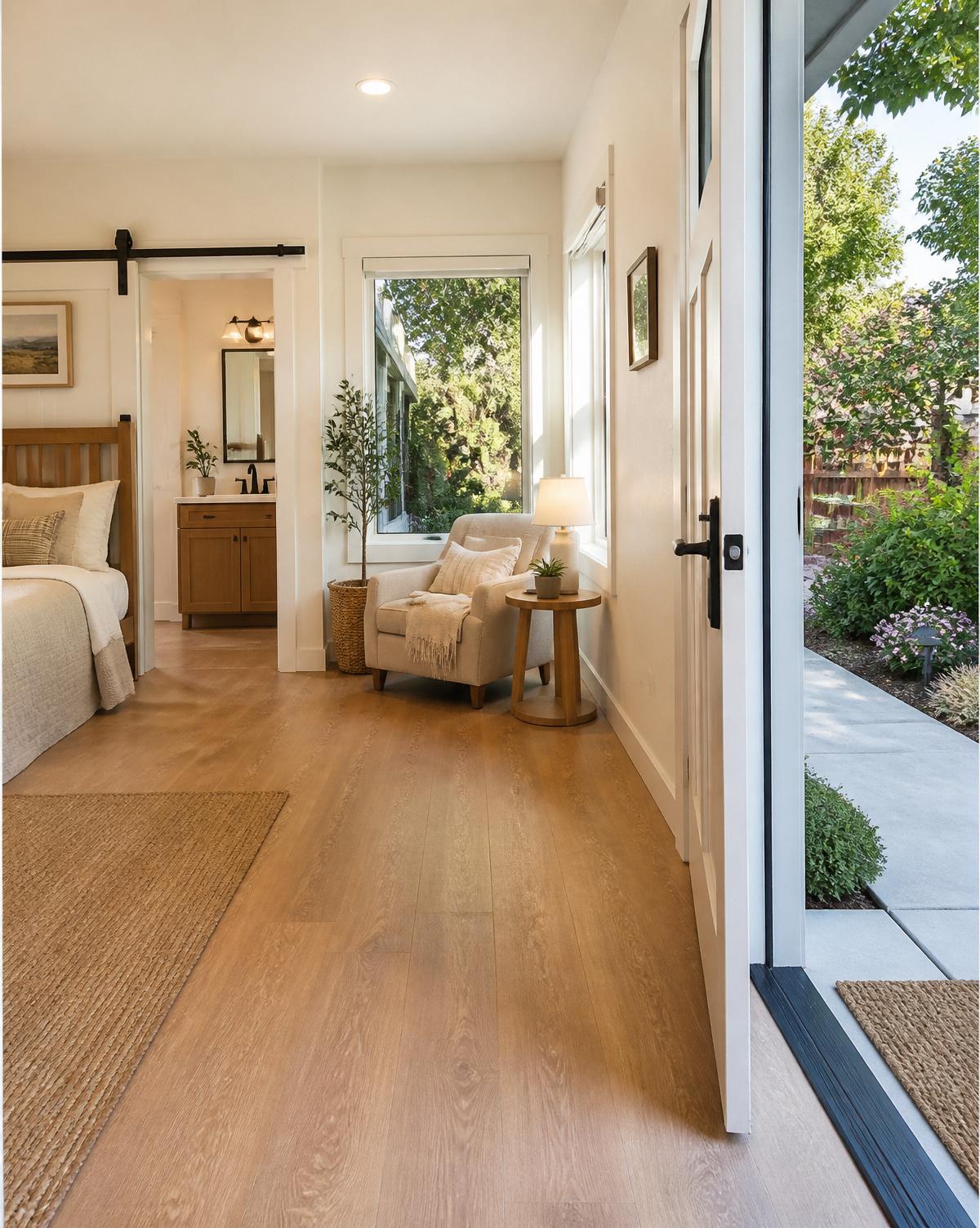
In-law suite at a glance
- Typical size
- 500–900 sq ft — enough for a bedroom, full bath, kitchen and living area without feeling institutional.
- Typical cost
- $180,000–$350,000 for a new detached suite; $60,000–$150,000 for an interior or garage conversion.
- Design must-haves
- Zero-step entry, 36-inch doorways, curbless shower, lever hardware, blocking in the walls for future grab bars.
- Timeline
- Roughly 10–16 months from Readiness Assessment to move-in, with permitting the largest variable.
- SB 531 note
- From July 1, 2027 no Virginia locality may require the ADU occupant to be a relative — so the suite can later become rental income.
In-law suite questions
How much does an in-law suite cost in Virginia?+
A new detached in-law suite generally runs $180,000–$350,000 depending on size and finish. Converting an existing basement, attic or attached garage into an accessory living unit typically runs $60,000–$150,000. Site work, utility runs and septic capacity are the biggest swing factors.
What is the difference between an in-law suite and an ADU?+
An in-law suite is a use, not a legal category. When it has its own kitchen, bathroom, sleeping area and exterior entrance, it meets the definition of an accessory dwelling unit and is permitted as one. Suites without a full kitchen are often treated as an addition instead, which changes the permitting path.
What aging-in-place features should an in-law ADU include?+
Zero-step entry, 36-inch doorways, a curbless roll-in shower, lever door hardware, reinforced blocking in bathroom walls for future grab bars, task lighting, and a bedroom and full bath on the entry level. Designed in from the start these features add very little cost; retrofitted later they are expensive.
Can I build an in-law suite for a parent before SB 531 takes effect?+
In many Virginia jurisdictions, yes. Loudoun and Arlington already permit detached accessory dwellings, and Fairfax permits interior accessory living units. Some counties currently restrict occupancy to family members, which is exactly the use case an in-law suite satisfies.
Does an in-law suite add value to a Virginia home?+
Generally yes, in two ways: appraised value from the additional legal, permitted living area, and optionality — once the suite is no longer needed for family it can be rented, which most lenders underwrite as durable income.